Benjamin Everett

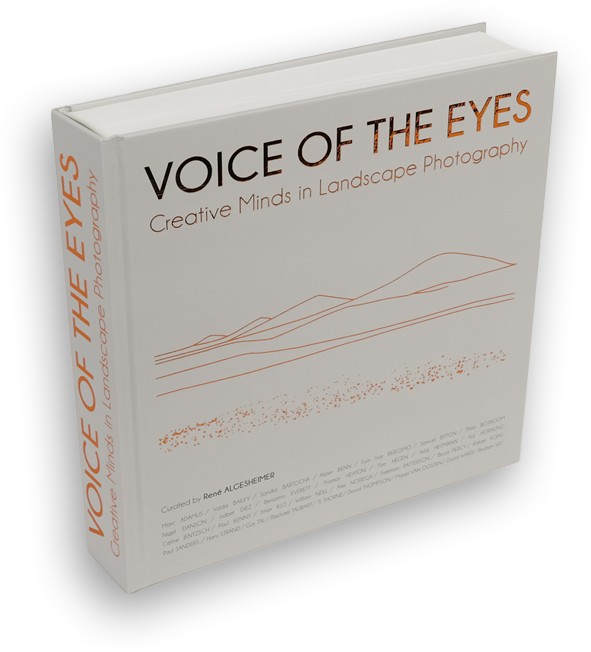
Benjamin Everett turns landscape photography into a space where perception, memory, and imagination meet. His hybrid landscapes move beyond straightforward documentation, blending photographic observation with the visual sensitivity of painting. The result is work that asks viewers to look twice: at the land itself, and at the inner experience it can awaken. In Voice of the Eyes, Everett’s perspective opens a rich conversation about image-making as process, photography as language, and the landscape as a stage for conscious experience.

Benjamin Everett’s creative identity is built around the meeting point between landscape, perception, and visual construction. His website describes his work as hybrid landscapes that mix the traditions of photography and painting. These images begin in the field, where he searches for locations that allow creative play, then continue in the studio, where collected visual elements become the foundation for further interaction and transformation.

In Voice of the Eyes, Everett describes the landscape as a stage for conscious experience. He is drawn to elemental subjects such as earth forms, water, clouds, wave forms, wind, erosion, ice, and snow. These elements interest him not only as physical subjects, but as ways to explore scale, repeated natural patterns, beauty, the sublime, and the language of images.

His work also reflects a continued dialogue with art history. Everett began by using photography as source material for paintings, but over time photography became a primary medium for exploring ideas. He describes his visual language simply as painterly, and his images often carry the feeling of memories or dreams, where multiple moments, altered scale, and transformed time coexist.

A key idea in his practice is that photographs can do more than describe a place. They can create emotional resonance, provoke questions about perception, and allow the viewer to enter a visual experience that exists between the external landscape and an internal state of attention.

  • Creative Context

    America

  • Photography Style

    Painterly hybrid landscape photography combining photographic observation, studio experimentation, memory, scale, and visual abstraction

  • Visual Themes

    Landscape
    Photography and painting
    Conscious experience
    Perception
    Memory
    Dreams
    Visual language
    Scale
    Natural forms
    Beauty
    The sublime
    Reality
    Creative process

Thoughts Behind the Work

"Photography is also a language, a way to collect and describe our thoughts and feelings in order to share."

Photography Approach

Benjamin Everett’s process begins with discovery. In the field, he does not always search for complete compositions. Instead, he often looks for what he describes as puzzle pieces: forms, textures, colors, lighting situations, and scenic details that may later become part of a larger image. His website similarly explains that he collects detailed photographs representing a fascination with specific aspects of a location, such as light on form, texture, color, or composition.

This way of working allows the landscape to become both source material and creative partner. Sometimes Everett begins with a clear concept; at other times, the landscape itself generates the idea. He may work from a free-thinking list of concepts, explore stylistic and compositional variety, experiment with files already in his archive, or respond to new landscapes encountered through travel.

The studio is an essential part of his practice. Collected elements are brought together through play, interactivity, and re-experience. The final image can function like a memory or dream, where scale, time, and multiple moments are transformed.

Everett’s approach is strongly process-focused. He values creative possibility, emotional resonance, harmony, and the feeling that parts relate meaningfully to the whole. Rather than treating photography as a fixed record, he uses it as a flexible language for exploring how visual experience is constructed.

Inside Voice of the Eyes

Inside Voice of the Eyes, Benjamin Everett reflects on photography as a language, a process, and a way to explore conscious experience. The interview reveals how strongly his practice is connected to discovery. He describes image-making as a way of finding new ways to see, being surprised by creative possibilities, and creating work with emotional resonance.

The conversation also clarifies how he understands landscape. Rather than treating it only as scenery, Everett sees the landscape as a place where perception, art history, meaning, beauty, and reality can be questioned. His interest in elemental forms is tied to larger ideas about how images communicate and how viewers interpret what they see.

A central insight from the interview is his openness to uncertainty. In discussing reality, fiction, and his work Everything is Fluid, Everett presents art as a question rather than a fixed statement. This makes the feature valuable because it shows a photographer thinking beyond the surface of the image and using landscape photography as a means of reflection, play, and inquiry.

Why Featured in Voice of the Eyes

Benjamin Everett belongs in Voice of the Eyes because his work expands the possibilities of landscape photography. His images do not simply record places; they investigate how photographs can hold memory, perception, emotional resonance, and constructed visual meaning. This makes his perspective especially relevant for a publication concerned with deeper ways of seeing.

His background in landscape painting gives his photography a distinctive foundation. Everett uses the camera to explore the relationship between painting and photography, while his studio process allows collected landscape elements to become something closer to dream, memory, or inner experience.

He is also featured because his interview offers unusually clear insight into creative process. He speaks about photography as language, about the importance of discovery, and about art as a way to question reality. Within Voice of the Eyes, his work contributes a thoughtful and layered view of how landscape imagery can connect the outer world with inner experience.

Benjamin Everett interview and landscape photography feature in Voice of the Eyes

Sample Question from the Interview

How do you feel about the work you are creating today and what do you hope toachieve with it?

I’m really enjoying the continual growth and evolution of my process. There can be diminishing
returns with our skills, but the ideas we can explore with them are endless. My interest and enjoyment
continue to deepen.

Discover the Complete Interview with Benjamin Everett

Frequently Asked Questions

Who is Benjamin Everett?

Benjamin Everett is an American photographer who began his creative career as a landscape painter and now works with photography to explore the relationship between painting, landscape, and perception.

How does Benjamin Everett describe his visual language?

Benjamin Everett describes his visual language as painterly.

What kind of photography does Benjamin Everett create?

He creates hybrid landscape photographs that combine traditions of photography and painting, using fieldwork, collected visual details, and studio experimentation.

What subjects does Benjamin Everett explore?

His work focuses on landscape, elemental natural forms, perception, visual language, scale, beauty, the sublime, memory, and conscious experience.

How does Benjamin Everett make his photographs?

He often gathers detailed photographic elements in the field, such as form, texture, color, and light, then uses them in the studio to create images that function like memories or dreams.

Why is Benjamin Everett featured in Voice of the Eyes?

Benjamin Everett is featured because his work and interview expand the discussion of landscape photography into questions of perception, meaning, process, and the relationship between photography and painting.

Explore Voice of the Eyes

Discover interviews, creative perspectives and curated landscape photography from exceptional artists featured throughout Voice of the Eyes.

Explore the Book