Céline Jentzsch
Céline Jentzsch’s photography is shaped by a search for connection: between inner life and outer world, between the photographed subject and the viewer, between travel and introspection. Her images move across landscapes, portraits, street scenes, and cultures, yet remain unified by a distinctly humanist sensibility. Rather than collecting appearances, she seeks what lies beneath them emotion, presence, fragility, and the subtle threshold where reality begins to feel dreamlike. This gives her work a rare clarity of intention. Céline Jentzsch matters because her photographs do more than record experience, they transform encounter into reflection and invite viewers to step into that space with her.
Céline Jentzsch’s creative identity is defined by breadth rather than limitation. She describes herself as a “visual gourmand and epicurean,” drawn to the world through its diversity rather than through a single fixed subject. Portraits, landscapes, nature, street scenes, architecture, festivities, and at times wildlife all form part of her photographic universe. What unites these varied subjects is not category, but the search for a personal and meaningful interpretation.
At the center of her work is a humanist impulse. She seeks exchange rather than detachment and values the relationship between photographer, subject, and viewer. This intention is crystallized in what she calls her “golden triangle”: a bridge between her inner soul, the outside world, and those who look at her photographs.
Her work also moves along a subtle line between dream and reality. She is drawn to beauty, humanity, and fragility, and increasingly to a more sensory, intimate, and abstract interpretation of what she sees. Landscapes can become emotional states; natural forms can suggest inner movement or transformation. In this sense, her photographs do not merely depict the world—they reveal how it is experienced from within.
This inward turn is also visible in her more recent creative direction, including Axis Mundala, a series linked to interiority, symbolic form, and spiritual resonance. Together, these elements define a body of work in which travel, contemplation, and artistic sensitivity remain inseparable.
Photographer Information & Visual Language
-
Official Website
Website Céline Jentzsch -
Creative Context
Switzerland
-
Photography Style
Humanist photography shaped by travel, softness, subtle post-processing, sensory observation, and an increasingly intimate and abstract interpretation of the world.
-
Visual Themes
Human connection
Travel
Portraits
Landscapes
Nature
Street photography
Architecture
Festivities
Beauty
Humanity
Fragility
Dream and reality
Thoughts Behind the Work
"I feel that my eyes and my camera are at the service of my spirit."
Photography Approach
Céline Jentzsch approaches photography through a balance of spontaneity and reflection. Her first reaction to a scene is often immediate and sensory: a color, a texture, a composition, an event, even a smell or a sound can trigger the desire to photograph. She remains highly attentive to what awakens her senses, but the initial impulse is usually followed by a more thoughtful reading of the scene.
This second stage often introduces symbolism and personal resonance. She may connect what she sees to her own development or emotional state, allowing subjects to become more than descriptive motifs. A river, for example, can become a metaphor for inner movement; a shrub in a lava field can evoke resilience and trust in one’s own resources.
A few years ago, she condensed key aspects of this approach into the word TRESORS: Time, Reactivity, Emotion, Senses, Originality, Respect, and Simplicity. These principles reflect how she observes, reacts, frames, and edits.
Her visual language is further shaped by softness and subtlety. Influenced by her years of painting, she works with shallow depth of field, slow shutter speeds, overexposure, and restrained post-processing to create photographs that reflect emotion rather than simply replicate appearances. She increasingly favors experience over quantity and photographs less than she once did, choosing with greater care when a scene truly calls to be transformed into an image.
Inside Voice of the Eyes
Céline Jentzsch’s conversation reveals a photographer whose work developed through both artistic and personal transformation. Readers learn how her journey began in painting, moved through macro floral compositions, and gradually evolved into a photographic practice shaped by travel, exchange, and self-exploration. What begins as a discussion about photography quickly opens into broader questions of attention, ethics, and inner development.
One of the most valuable insights in the interview is her rejection of purely consumptive image-making. She speaks openly about moving away from simply collecting scenes and toward a more engaged way of working, one based on interaction, slowness, and the effort to extract what she calls the quintessence of a place or person.
The conversation also introduces the core concepts that structure her approach: her “golden triangle,” the TRESORS framework, the importance of softness and subtlety, and her increasing trust in intuition. Added to this is a strong ethical awareness, sharpened by experiences in the field, especially in relation to photographed people and vulnerable places. Together, these reflections make the interview valuable not only for photographers, but for anyone interested in how artistic practice can deepen perception.
Why Featured in Voice of the Eyes
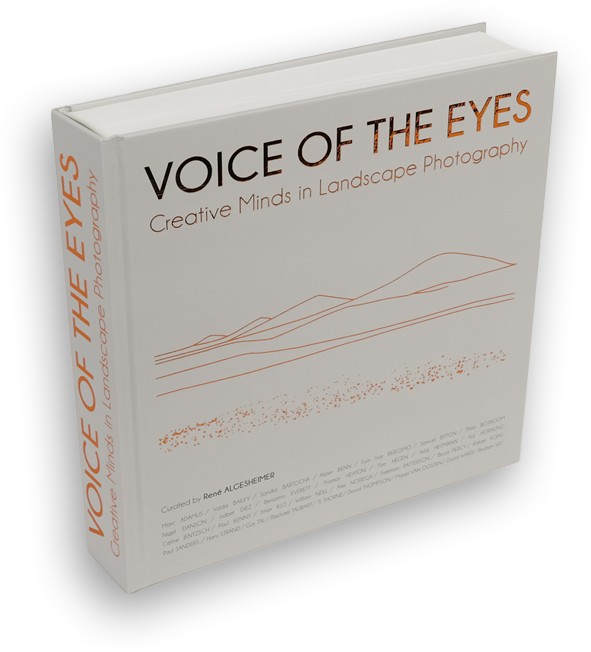
Céline Jentzsch belongs in Voice of the Eyes because her work embodies photography as both outward journey and inward inquiry. Her images are rooted in travel, but they are never limited to destination or spectacle. Instead, they ask how a photograph can carry emotion, reveal fragility, and create a genuine bridge between subject, photographer, and viewer.
Her perspective is especially important because it brings together several dimensions that matter deeply to the publication: human connection, artistic evolution, ethics, and the search for a personal visual language. She does not present photography as a neutral act of observation, but as a practice that involves responsibility, sensitivity, and self-knowledge.
What makes her contribution particularly valuable is the way she articulates that process. Through concepts such as the golden triangle and TRESORS, she offers readers a language for thinking about photography beyond technique alone. In doing so, Céline Jentzsch strengthens the book not only through the images she makes, but through the clarity and depth with which she reflects on why those images matter.
Sample Question from the Interview
Why do you photograph?
After several years of painting, photography turned out to be a new medium of expression for
me that fulfilled me even more. I started with macro photography, creating and shaping floral
compositions, working with backgrounds and color combinations. It was a bit like trading in my
painter’s palette to create something three-dimensional with my hands, to then capture it in a
photograph.Then travel became a big part of my life. At the beginning, photography was a way to capture
fragments of life from the end of the world, and I was simply happy to be able to record scenes
which were very new to me.But, little by little, I felt that this kind of consumerism approach to capturing images was not
fulfilling me, and it encouraged me to engage more with my subjects and with the world that
unfolded before my eyes in order to extract the quintessence of a place or a person. Since
then, interactivity and exchange have become keys to approach my subjects. This approach
to photography has become a powerful tool for me to push me out of my comfort zone. Slowing
down and taking more
Frequently Asked Questions
Who is Céline Jentzsch?
Céline Jentzsch is a French photographer living in Switzerland whose work combines travel, humanist photography, and a deeply personal visual approach.
What subjects does Céline Jentzsch photograph?
She works across portraits, landscapes, nature, street photography, architecture, festivities, and sometimes wildlife.
How does Céline Jentzsch describe her photography?
Her work is shaped by human connection, sensory observation, softness, and a bridge between her inner self, the outside world, and the viewer.
What is the “golden triangle” in Céline Jentzsch’s work?
It is her way of describing the connection between her inner soul, the photographed subject, and the viewer.
What does TRESORS mean in Céline Jentzsch’s photographic approach?
TRESORS stands for Time, Reactivity, Emotion, Senses, Originality, Respect, and Simplicity.
How has Céline Jentzsch’s visual language changed over time?
Her work has evolved from a more innocent and descriptive approach toward a more personal, intimate, sensory, and abstract interpretation of the world.
What role does ethics play in Céline Jentzsch’s photography?
Ethics are central to her practice. She emphasizes respect, human contact, and awareness of the impact photographs can have on people and places.

Explore Voice of the Eyes
Discover interviews, creative perspectives and curated landscape photography from exceptional artists featured throughout Voice of the Eyes.