David Thompson

Landscape photograph by David Thompson revealing quiet light, intimate atmosphere, and a grounded connection to nature through a thoughtful and understated visual approach.

David Thompson’s creative identity is built around connection: connection to nature, to light, and to the quiet emotional states that arise from being fully present in a place. He works across a broad range of natural subject matter, from forests, deserts, and mountains to coasts, bayous, aerials, and small intimate scenes. What unites these subjects is not category alone, but the way they allow him to connect with both the landscape and himself.

Light is central to how he sees. He has said that his first reaction in the field usually comes down to what the light is doing to the landscape, and whether it creates a visual response strong enough to draw him in. That emphasis gives his photographs their immersive quality and helps explain why they often feel less like documents than lived moments translated into image.

His work has also become more personal over time. He describes his visual language as subdued, restrained, understated, thoughtful, reserved, and quiet, aligning it with his own personality. Earlier influences led him to admire certain aesthetics in other photographers, but experience gradually pushed him toward smaller things in nature, more deliberate choices, and a more individual voice.

Long-term studies have become an important part of that development. Bodies of work such as his Bisti Wilderness project show a patient commitment to returning, refining, and letting vision mature. Across the work, David Thompson’s aim remains consistent: to create photographs that feel intimate, grounded, and capable of taking the viewer on a visual journey.

  • Creative Context

    Las Vegas, Nevada, United States

  • Photography Style

    Landscape and nature photography marked by intimate scenes, subdued and restrained presentation, thoughtful composition, and an immersive response to light and atmosphere.

  • Visual Themes

    Nature
    Light
    Intimate scenes
    Visual story
    Personal connection
    Grounded observation
    Forests
    Deserts
    Mountains
    Coasts
    Aerial landscapes
    Patience and growth

Thoughts Behind the Work

"Each image is an attempt to translate not just what a place looks like, but what it feels like to stand there in that moment."

Photography Approach

David Thompson’s process begins with response rather than rigid prescription. He may have a general concept in mind, but often the work starts with only a few images and grows organically from there. He then returns to related locations, gathers material over time, and gradually shapes a project through repeated engagement and careful curation.

Light is often the decisive factor in the field. He lets it dictate both the subject and the way he photographs it. Sometimes that response is instinctive, other times impulsive, but he remains attentive to whether the light is creating a meaningful reaction in him. He is equally willing to acknowledge when he is not connecting with a place or condition.

His method also depends on patience. He prefers long-term projects because they allow imagery to become cohesive and rewarding through time. He describes a strong and sometimes tedious curation process, eliminating images that do not support the flow of a project. Presentation is part of this same discipline. He wants the work to feel clean, quiet, thoughtful, and meticulous, with the final form reflecting both the experience of the moment and the clarity of his vision.

At its core, his approach is about letting connection deepen into image.

Inside Voice of the Eyes

David Thompson’s conversation reveals a photographer for whom image-making is as much about inner grounding as outward observation. Readers learn quickly that photography functions for him as both a creative outlet and a form of stress relief, a way to leave behind the pressures of daily life and reconnect with nature in a more intimate, personal, and restorative way.

One of the most useful insights in the interview is the central role of light. He explains that it is often the first thing that makes him react in the field, and that it guides both his subject choice and the emotional tone of the resulting image. This helps clarify why his photographs feel so attentive to atmosphere without becoming excessive or theatrical.

The interview also traces the evolution of his visual language. He moved away from emulating admired aesthetics and toward a quieter, more deliberate approach rooted in smaller moments, personal nuance, and patience. The result is a clearer understanding of a photographer who values growth, thoughtful curation, and an honest relationship between self, place, and image.

Why Featured in Voice of the Eyes

David Thompson belongs in Voice of the Eyes because his work demonstrates how landscape photography can remain immersive and accessible while still carrying personal depth. His images are grounded in direct experience, careful observation, and a sustained effort to translate what a place feels like rather than merely what it looks like.

He is especially relevant to the publication because he speaks openly about photography as a means of connection, healing, and growth. The work is not built around spectacle or trend, but around light, patience, and the slow development of vision. That gives his photographs a sincerity that aligns closely with the book’s broader interest in how photographers truly see.

His contribution also adds an important perspective on evolution. He shows how artistic maturity can come through letting go of outside expectations, trusting quieter instincts, and allowing projects to develop over time. That makes his presence in the book both grounded and valuable.

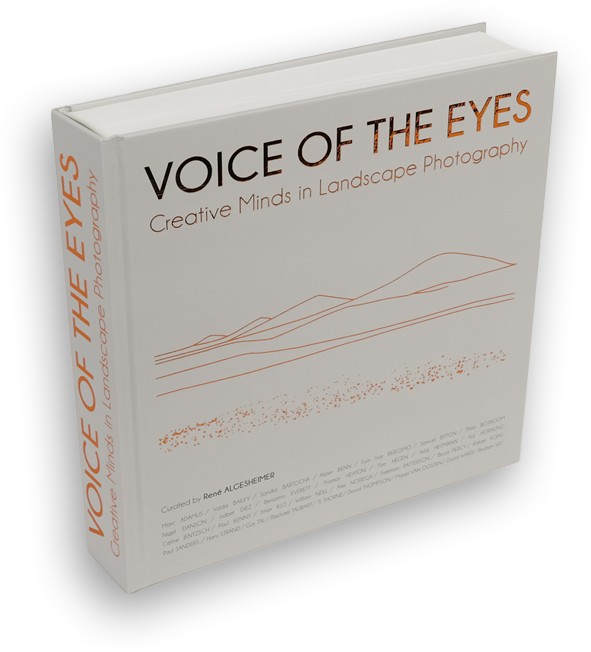
David Thompson interview and landscape photography feature in Voice of the Eyes

Sample Question from the Interview

Do you prefer short- or long-term projects? Why?

I prefer long-term projects. Long-term projects keep me busy, as I like to take my time and try to
make the imagery cohesive. I also like the process of putting these projects together. I like the
process of putting these projects together to be organic. Lastly, long-term projects for me tend
to be more rewarding in the end. For example, my longest project to date was The Bisti Wilderness
– The Extraterrestrial Landscape gallery on my website, a gallery of images that I made from
the Bisti Wilderness in New Mexico from the years 2013-2019. The area is very unique in its own
way with various landscape formations, hoodoos, and pinnacles that are spread out across the
vast desert. I have not remotely scratched the surface there with exploring, but I knew from my first
visit, in 2013, that I wanted to dedicate a gallery of images from this area, because of its unique
features. It was a challenging project, to say the least. I have made multiple visits throughout the
years and have had a difficult time with compositions and processing that I was happy with. It
took quite a long time to find my flow with the processing and compositions. But once I started
getting more comfortable, and my vision started to improve, I was able to get into a better flow,
and the project eventually took off.

Discover the Complete Interview with David Thompson

Frequently Asked Questions

Who is David Thompson?

David Thompson is a US landscape photographer and educator based in Las Vegas, Nevada, working across the American Southwest and beyond.

What does David Thompson photograph?

He photographs a wide range of nature subjects, including forests, deserts, mountains, coasts, aerial scenes, intimate landscapes, and the bayous of the South.

What defines David Thompson’s visual approach?

His approach is shaped by light, thoughtful composition, intimate connection with nature, and a subdued, restrained, and quiet visual language.

Does David Thompson work on long-term projects?

Yes. He prefers long-term projects because they allow imagery to develop organically over time and become more cohesive and rewarding through repeated visits and curation.

Where is David Thompson based?

He is based in Las Vegas, Nevada, with close access to many of the desert landscapes of the American Southwest.

Does David Thompson teach photography?

Yes. He offers workshops, private tours, and post-processing instruction.

What role does photography play in David Thompson’s life?

Photography serves as both a creative outlet and a mental one, helping him stay grounded, relieve stress, and build a more intimate connection with the natural world.

Explore Voice of the Eyes

Discover interviews, creative perspectives and curated landscape photography from exceptional artists featured throughout Voice of the Eyes.

Explore the Book

Related Photographers

William Neill

William Neill

View Photographer