Freeman Patterson

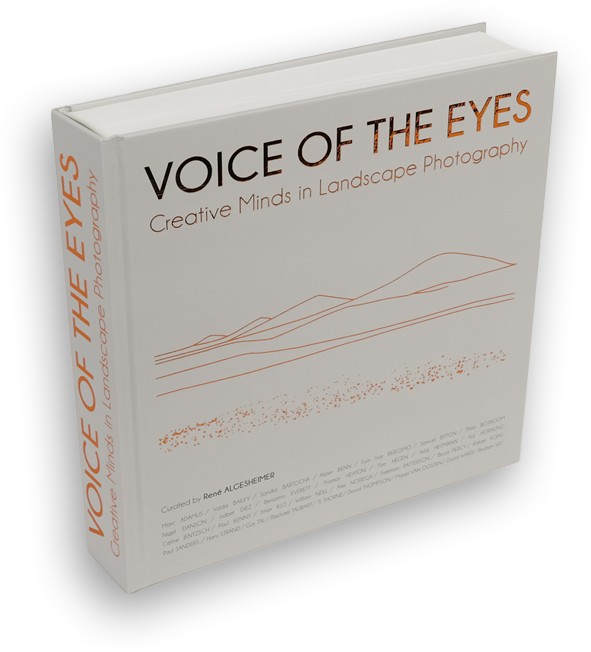
Freeman Patterson’s work matters because it treats photography not as description, but as a form of visual expression shaped by feeling, symbolism, and design. His images do not simply show what was in front of the camera; they seek to give form to what was recognized more deeply, whether consciously or unconsciously. That is what makes his work distinctive. Even when rooted in ordinary subject matter, it carries a sense of inward discovery. For readers of Voice of the Eyes, Freeman Patterson is especially compelling because he connects photography to larger questions of meaning, creativity, and the life of the imagination without losing touch with the physical world.

Freeman Patterson’s creative identity is built around the conviction that photography is a medium of personal expression and communication. He is less interested in photography as a technical discipline than in what an image can reveal about feeling, meaning, and the symbolic life of the subject. For him, a successful photograph is one in which visual form expresses symbolic content that the photographer has recognized, consciously or unconsciously, in what is being seen.

This gives his work a distinctive depth. His subject matter is not fixed by category, but by emotional charge. Whatever moves him can become material for photography. Over time, that responsiveness has been shaped by a broad life in nature, by teaching, by personal hardship, and by a long engagement with the creative process itself.

A central idea in his work is the relationship between nature and creativity. In his art statement, he describes creation and creativity as inseparably linked, and identifies the health of the biosphere as the physical and spiritual basis of life. This awareness forms what he calls the central core of his work. Nature, including human beings, is not merely scenery or subject matter; it is the ground from which symbolic meaning emerges.

He is also deeply attentive to the integrated whole of an image. Abstracting visual elements may come automatically, but bringing them together into a coherent visual expression remains, for him, an enduring challenge. That balance between emotional immediacy and formal clarity defines the work across decades.

  • Creative Context

    Shamper’s Bluff, New Brunswick, Canada

  • Photography Style

    Photography grounded in emotional response, symbolic content, visual design, and the abstraction of natural elements into integrated visual wholes.

  • Visual Themes

    Emotional response
    Symbolic content
    Visual design
    Nature
    Creativity
    Meaning
    The unconscious
    Freedom
    Integrated wholes
    Biosphere
    Personal expression
    Communication

Thoughts Behind the Work

"I photograph because I feel."

Photography Approach

Freeman Patterson works from the bottom up. Rather than beginning with a fixed concept, he responds first to what stirs him emotionally and allows meaning to emerge through sustained engagement with the subject. His first impulse in the field is not analytical but affective: something causes an emotional response, and that response becomes the starting point for the photograph.

From there, his process is shaped by visual design. He prefers terms such as visual communication, visual expression, and visual design over “visual language,” because for him the photograph is not subordinate to words. Composition depends on respect for the subject matter, the nature of his emotional response, and the intention behind the image. If he is making a documentary photograph, he gives primacy to the subject. If he is aiming to convey feeling rather than literal description, he treats the subject more freely, as a potter works with clay.

He does not force projects into fixed timelines. Instead, he works until the emotional energy that drives the photographs is exhausted. Only later, often in the editing process, do the underlying symbols and the coherence of a project become clear. This approach places trust in discovery, intuition, and the unconscious, while still relying on craft to make the expression legible and complete.

Inside Voice of the Eyes

Freeman Patterson’s conversation reveals a photographer who understands image-making as something far deeper than recording appearances. Readers are introduced almost immediately to his core position: he photographs because he feels, and the camera serves as a non-verbal tool for personal expression and communication. That directness sets the tone for an interview shaped by reflection rather than self-mythology.

One of the most valuable insights in the conversation is his insistence that visual form must express symbolic content. He repeatedly returns to the relationship between emotional response, unconscious recognition, and design, showing how photographs become meaningful when they give shape to something inwardly experienced rather than merely externally observed.

The interview also offers a rare account of how symbols emerge through practice. His discussion of the Paran greenhouse photographs and the way they eventually revealed the story of illness and recovery is especially revealing. It shows how sustained work, patient editing, and openness to the unconscious allow meaning to surface over time. For readers, the conversation becomes not just an interview about photography, but a meditation on art, memory, and creative freedom.

Why Featured in Voice of the Eyes

Freeman Patterson belongs in Voice of the Eyes because he brings a rare level of intellectual and emotional clarity to the question of what photography can be. His work stands at the intersection of feeling, design, symbolism, and lived experience, making it especially resonant within a publication concerned with vision in its fullest sense.

He is also important because he has influenced generations of photographers through teaching and writing while continuing to evolve as an artist himself. Yet what makes his contribution most valuable is not authority alone. It is the depth of his thinking about the image as a vehicle for meaning.

His presence strengthens the book by expanding the discussion beyond style or technique. Freeman Patterson reminds readers that photography can serve as personal expression, a way of working with unconscious material, and a path toward freedom. That perspective gives his photographs weight, and it gives his interview lasting relevance.

Freeman Patterson interview and landscape photography feature in Voice of the Eyes

Sample Question from the Interview

What “makes” a good photograph?

A good image is one in which the form (visual design of the content) expresses the symbolic content that the creator recognized (consciously or unconsciously) in the subject matter.

Discover the Complete Interview with Freeman Patterson

Frequently Asked Questions

Who is Freeman Patterson?

Freeman Patterson is a Canadian photographer, teacher of visual design, writer, and gardener based at Shamper’s Bluff in New Brunswick.

What is central to Freeman Patterson’s photography?

His work centers on emotional response, symbolic content, and visual design, using photography as a non-verbal form of personal expression and communication.

What subjects does Freeman Patterson photograph?

He photographs whatever moves him, with much of his work grounded in nature and in the emotional and symbolic meaning he discovers there.

How does Freeman Patterson approach projects?

He usually works from the bottom up, allowing images and their emotional energy to guide the development of a project rather than starting from a fixed concept.

Why is presentation important to Freeman Patterson?

He considers presentation extremely important and wants frames and layout choices to support the image quietly rather than compete with it.

How has Freeman Patterson’s work changed over time?

He says his visual expression has changed as he has changed, with the major influence being the sweep of life events, both huge and tiny.

What has Freeman Patterson found on his artistic path?

He says he has found freedom.

Explore Voice of the Eyes

Discover interviews, creative perspectives and curated landscape photography from exceptional artists featured throughout Voice of the Eyes.

Explore the Book