Kai Hornung

Kai Hornung’s photographs are driven by a desire to transform observation into personal expression. Moving effortlessly between intimate details, abstract patterns, and dramatic landscapes, he approaches nature not as a collection of subjects but as a source of stories, emotions, and visual possibilities. His images are less concerned with documenting a place than with communicating a response to it. Through a visual language shaped by intuition, artistic vision, and a lifelong commitment to creativity, Hornung creates photographs that invite interpretation and reflection. His work demonstrates how landscape photography can become a deeply personal form of communication while remaining open to the experiences of others.

Kai Hornung is most interested in showing the diversity of nature, ranging from intimate and abstract scenes to dramatic landscapes. Rather than restricting himself to a specific type of subject, he photographs whatever creates a personal connection and stimulates his curiosity. This openness allows him to move freely between different scales of observation, from reflections and textures to expansive mountain scenery.

A recurring aspect of his work is the search for meaning through visual interpretation. He describes photography as a form of communication and emphasizes the importance of artistic vision, narrative, mood, and personal expression. For him, a photograph becomes meaningful when it conveys something beyond its visual appearance and creates a connection with the viewer.

Over time, his photography evolved from a focus on dramatic and widely recognized landscape scenes toward more intimate and abstract work. This shift was closely connected to a search for a more personal visual language. He increasingly became interested in images that leave room for interpretation and invite viewers to engage with them on an emotional level.

Throughout his work, authenticity remains essential. He values photographs that express genuine feeling and personal experience. Whether photographing grand vistas or subtle details, he seeks images that reflect his own response to a place and communicate that response through a distinctive visual voice.

  • Official Website

    Website Kai Hornung 
  • Creative Context

    Germany

  • Photography Style

    Landscape photography exploring intimate scenes, abstract interpretations of nature, and dramatic vistas through personal expression and visual storytelling.

  • Visual Themes

    Nature
    Personal expression
    Visual storytelling
    Abstract landscapes
    Intimate nature scenes
    Patterns in nature
    Atmosphere
    Emotion
    Creativity
    Artistic vision
    Narrative
    Authenticity

Thoughts Behind the Work

"I do photograph to capture moments and places in time and make them mine."

Photography Approach

Kai Hornung’s approach to photography is strongly guided by intuition. Rather than arriving with a fixed image already in mind, he prefers responding to what a place offers in the moment. He often allows images to find him rather than actively searching for a predetermined result. This process encourages openness to unexpected discoveries and subjects that might otherwise be overlooked.

When working in the field, he reacts to light, patterns, shapes, colors, textures, and atmosphere. A lone tree, reflections on water, fog in a valley, cracked mud, or abstract patterns in nature can all become subjects if they establish a personal connection. He values adaptation to current conditions more than repeatedly returning to a location while waiting for ideal circumstances.

His image-making process frequently begins with observation and emotional response. The meaning of a photograph is not always immediately clear while shooting and may reveal itself later during editing. Intuition therefore plays an important role both in the field and during post-processing.

Projects often emerge from individual photographs that spark larger ideas. Although he sometimes works concept-first, he more commonly develops projects from images that suggest a broader narrative. Throughout this process, he values authenticity, artistic vision, and the ability of photographs to communicate feeling and meaning.

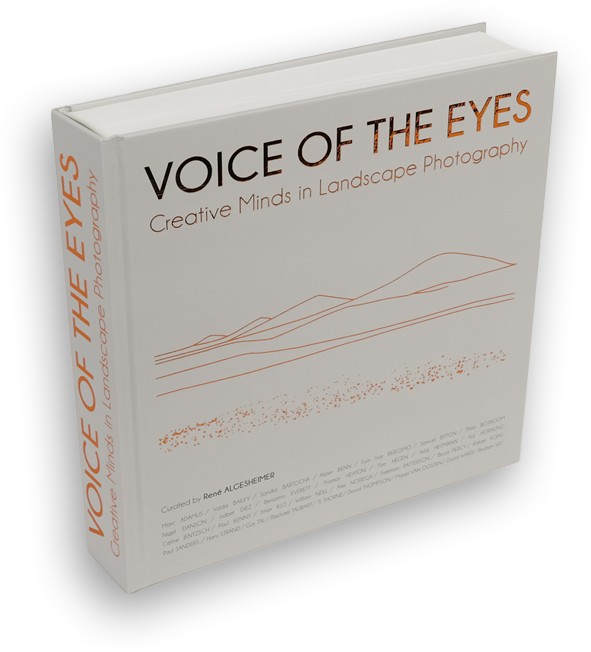
Inside Voice of the Eyes

Kai Hornung’s conversation reveals photography as an extension of a broader creative life. Readers gain insight into how music, writing, drawing, and visual art all contributed to his understanding of creative expression. Photography emerges not as an isolated activity but as part of a lifelong need to create and communicate.

The interview explores his belief that strong photographs are defined less by technical perfection than by artistic vision, story, mood, and personal meaning. He explains how photographs can function similarly to poems or songs, conveying emotions and ideas that are sometimes difficult to express through words.

Readers also discover how his visual language developed over time. Hornung reflects on moving away from highly dramatic landscape imagery toward more intimate and abstract photographs that leave room for interpretation. He discusses intuition, authenticity, project development, presentation, and the role of personal connection in creating meaningful work.

Throughout the conversation, photography is presented as both a creative practice and a means of understanding personal experience, making the interview valuable for readers interested in artistic growth and visual communication.

Why Featured in Voice of the Eyes

Kai Hornung’s contribution to Voice of the Eyes offers an important perspective on photography as a form of creative expression and communication. His work demonstrates how landscape photography can move beyond documentation and become a vehicle for storytelling, emotion, and personal interpretation.

The interview contributes valuable insight into the development of an individual visual language. By openly discussing intuition, authenticity, artistic growth, and the search for meaningful imagery, Hornung provides readers with a thoughtful reflection on the creative process itself.

His perspective strengthens the publication because it highlights the relationship between photography and other creative disciplines, particularly music and writing. This broader view of artistic practice enriches the conversations within Voice of the Eyes and demonstrates how personal experience can shape a distinctive photographic voice.

Through his emphasis on artistic vision, narrative, and emotional resonance, Hornung contributes a perspective that extends beyond technique and encourages deeper engagement with photography as a creative medium.

Kai Hornung interview and landscape photography feature in Voice of the Eyes

Sample Question from the Interview

When do you know that a project is finished?

That’s either by coming closer to the given deadline or when I feel I cannot add anything to the
project anymore. Or having reached the point that letting go is the best to do.
And there are few occasions when it just feels like “boom, done!” Those are the best and
easiest.

And also, rarest.

Discover the Complete Interview with Kai Hornung

Frequently Asked Questions

Who is Kai Hornung?

Kai Hornung is a landscape photographer and human resource consultant from Germany.

What subjects does Kai Hornung photograph?

He photographs a wide range of natural subjects, including intimate details, abstract scenes, patterns in nature, and dramatic landscapes.

How does Kai Hornung describe a good photograph?

He believes a good photograph combines artistic vision, story, meaning, and the ability to communicate something to the viewer.

How has his photography changed over time?

His work evolved from dramatic landscape imagery toward more intimate and abstract photographs that leave room for interpretation.

How does Kai Hornung approach photography in the field?

He prefers responding intuitively to conditions and often allows images to emerge naturally rather than pursuing predetermined compositions.

Does Kai Hornung prefer short- or long-term projects?

Although he enjoys both, he generally prefers long-term projects because they allow ideas and narratives to develop over time.

What role does creativity play in his life?

Creativity has been a lifelong theme expressed through drawing, writing, music, and photography.

Explore Voice of the Eyes

Discover interviews, creative perspectives and curated landscape photography from exceptional artists featured throughout Voice of the Eyes.

Explore the Book