Marsel van Oosten

Marsel van Oosten’s photography stands out for the precision with which it transforms nature into image. His work is not driven by spectacle alone, but by a disciplined search for visual order, strong shapes, and a clean, unmistakable idea. Whether he is photographing wildlife or landscape, he looks for photographs that are both striking and distilled, images in which beauty and vulnerability can coexist. That combination gives the work its force. It invites viewers to admire the natural world, but also to recognize how fragile it is. In Voice of the Eyes, that clarity of vision makes his contribution especially compelling.

Marsel van Oosten’s creative identity is built around a highly refined encounter between nature and design. Although his subject matter is the natural world, what defines his work is not subject alone but the way he organizes it visually. He is drawn to landscapes and wildlife because they bring him joy, yet he approaches them with the eye of someone deeply concerned with structure, separation, hierarchy, and clarity.

His ideal photograph, as he has put it, is a spectacular landscape image with an animal in it. That says much about the work as a whole. He does not isolate wildlife from place, nor does he treat landscape as mere backdrop. Instead, he seeks images in which animal and environment reinforce each other, while also expressing scale and the grandeur of nature.

A central aspect of his identity is simplification. He repeatedly speaks of getting rid of the extraneous and of wanting images that are clean, graphic, and single-minded. This sensibility likely connects his photographic work to his past as an art director, but in photography it becomes something more personal: a way of translating the natural world into images that feel unmistakably his.

At the same time, his work carries an environmental urgency. The photographs do not only celebrate beauty; they also remind viewers how fragile wildlife and landscapes can be. In recent work, especially in connection with his book Mother, that concern becomes more explicit, linking visual elegance to a broader message about the state of the planet.

  • Creative Context

    South Africa

  • Photography Style

    Nature and wildlife photography defined by simplicity, clean and graphic compositions, strong shapes, careful visual hierarchy, and a refined use of composition, lighting, color, and perspective.

  • Visual Themes

    Nature
    Wildlife
    Fragility of the natural world
    Exceptional beauty
    Scale
    Graphic shapes
    Visual order
    Landscape and animal relationships
    Conservation
    Grandeur
    Clean composition
    Uniqueness

Thoughts Behind the Work

"A good photograph is one that does exactly what the photographer intended."

Photography Approach

Marsel van Oosten works through preparation, previsualization, and control. He has said that the most important part of his photography comes before the actual picture-taking. He spends substantial time planning, often knowing before departure what he wants to shoot, where, why, and how. This preparation is not simply practical; it is part of how he shapes the final image.

In the field, he is strongly responsive to design. He looks for the way elements are organized inside an imaginary frame, and he is especially sensitive to graphic locations, powerful shapes, and clear separation. For wildlife, he prefers large mammals because they allow him to place the animal relatively small in the frame while still showing a substantial amount of the landscape.

His criteria for satisfaction are demanding. He looks for a single-minded idea, a strong visual hierarchy, a clean and uncluttered look, balance, and, ideally, a sense of scale. He is happiest when every one of those conditions comes together.

He also favors long-term work. Repeated visits move him beyond the obvious and force him to find fresher, more specific solutions. That persistence, together with a perfectionist urge to refine and simplify, is central to how his photographs are made.

Inside Voice of the Eyes

Marsel van Oosten’s conversation reveals a photographer whose work is driven as much by discipline as by passion. Readers learn that photography did not begin for him as a casual pastime, but as one expression within a lifelong need to create. That instinct, combined with a background in advertising and art direction, helps explain the unusual clarity and deliberate structure of his images.

One of the strongest insights in the interview is the extent to which preparation matters to him. He does not rely on wandering or chance alone, but works through previsualization, planning, and a very exact set of visual criteria. This makes the interview especially valuable because it clarifies how images that may appear effortless are often the result of deeply considered choices.

The conversation also brings out his perfectionism and his desire for uniqueness. He speaks about resisting outside influence, staying true to his own impulses, and making artistic decisions that go beyond style in a superficial sense. Together, these reflections reveal a photographer who is not only pursuing beauty, but building a coherent visual philosophy around order, precision, and personal intent.

Why Featured in Voice of the Eyes

Marsel van Oosten belongs in Voice of the Eyes because his work demonstrates how nature photography can be both visually seductive and conceptually exacting. His photographs are immediately striking, yet their power comes from more than color or spectacle. They are shaped by rigorous choices about composition, hierarchy, scale, and simplification.

His perspective is especially important because he bridges several worlds with unusual fluency: art direction, wildlife photography, landscape photography, and environmental concern. That combination gives his work a level of polish and intentionality that feels both highly crafted and deeply personal.

He also strengthens the publication through the seriousness of his message. The beauty in his images is never empty; it is tied to a recognition of fragility and to a desire to reconnect viewers with the natural world. In a book that explores how photographers see and why that vision matters, Marsel van Oosten brings a voice of precision, passion, and consequence.

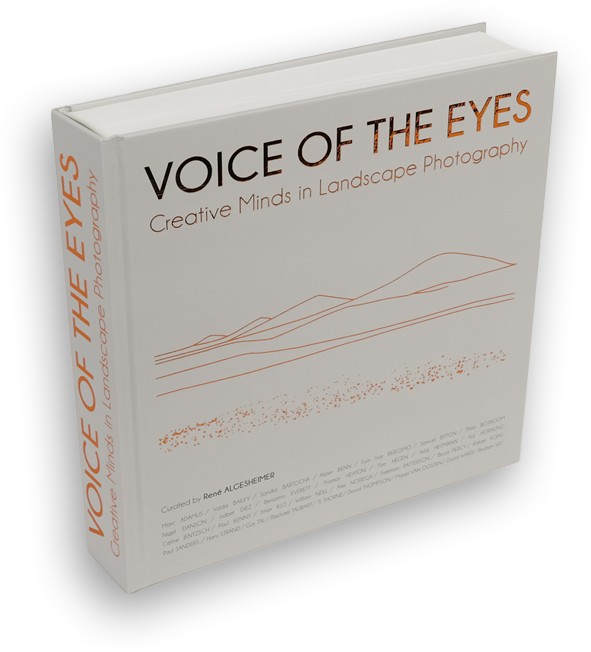
Marsel van Oosten interview and landscape photography feature in Voice of the Eyes

Sample Question from the Interview

What makes you react at first in the field to take out your camera?

The most important part of my photography is the part before the actual picture taking. I am a
bit of a control freak, so I spend a lot of time on preparation and planning. This is partly because
this enables me to be much more efficient and productive, but also because I try to previsualize
the images that I want to create. By the time I get on the plane, I already know what I am going
to shoot, why, where, and how. I don’t like to just wander around in a location trying to come up
with ideas on the spot. When I’m unprepared, I am mostly triggered by how the elements are
organized inside the imaginary frame, by the graphic design of the location.

Discover the Complete Interview with Marsel van Oosten

Frequently Asked Questions

Who is Marsel van Oosten?

Marsel van Oosten is a Dutch photographer and traveler specializing in nature and wildlife photography. He was born in Rotterdam and now lives in South Africa.

What is Marsel van Oosten known for?

He is known for nature and wildlife photographs that combine strong composition, powerful graphic shapes, clean visual design, and a clear sense of scale.

What subjects does Marsel van Oosten prefer to photograph?

He photographs both landscapes and wildlife, with a particular preference for large mammals in landscape settings and graphic natural locations with powerful shapes and clean lines.

How does Marsel van Oosten work in the field?

He relies heavily on planning and previsualization. Before a trip, he often already knows what he wants to photograph, where, why, and how.

Why are long-term projects important to Marsel van Oosten?

He prefers long-term projects because repeated visits move him beyond the obvious and force him to dig deeper into his artistic ideas, resulting in more original images.

What role does conservation play in his work?

His photographs are intended not only to show beauty, but also to remind viewers how fragile wildlife and landscapes can be and to encourage renewed concern for the natural world.

What major awards has Marsel van Oosten won?

His awards include the overall titles Wildlife Photographer of the Year, Travel Photographer of the Year, and International Nature Photographer of the Year, along with many other first prizes and honors.

Explore Voice of the Eyes

Discover interviews, creative perspectives and curated landscape photography from exceptional artists featured throughout Voice of the Eyes.

Explore the Book