David Ward

David Ward’s photography matters because it asks landscape to do more than describe. His work is shaped by a sustained enquiry into how the mind perceives the world and how the camera records it, and that tension gives his images their distinctiveness. Rather than competing in what he describes as an arms race of the spectacular, he increasingly turns toward subtlety, ambiguity, and the overlooked. Small details, anonymous places, and quiet visual paradoxes become sites of wonder. That approach makes his photographs especially resonant: they do not simply reveal a place, they ask the viewer to think more carefully about seeing itself.

David Ward’s creative identity is rooted in enquiry. He has said that his central photographic concern is the gap between how the mind and eye perceive reality and how the camera sees. That idea shifts his work away from straightforward description and toward a more probing relationship with the visible world. The landscape may provide the material, but it is often not the true subject. What interests him more is how photography bends, simplifies, distills, and sometimes deceives perception.

This is why ambiguity matters so much in his work. He wants images that are questions rather than answers, photographs that leave room for the viewer rather than sealing meaning shut. Over time, his work has moved toward more abstract images, though not at the cost of emotional engagement. He still responds deeply to natural environments, but he increasingly finds the overlooked, the tiny, and the anonymous more revealing than the grand vista.

Beauty, mystery, and simplicity form the foundation of this identity. He treats beauty not as mere prettiness, but as something revelatory. Mystery gives an image its lingering power. Simplicity is the discipline that allows both to emerge. These concerns are reflected not only in the interview, but also in the structure of his website, where Beauty, Mystery, and Simplicity each stand as distinct gallery groupings.

What ultimately defines David Ward’s work is a refusal to settle for revelation alone. His photographs are contemplations, shaped by design, restraint, and a commitment to making images that remain open.

  • Official Website

    Website David Ward 
  • Creative Context

    United Kingdom

  • Photography Style

    Landscape photography defined by simplicity, strong design, contemplative ambiguity, and an attention to overlooked details, anonymous places, and subtle visual paradoxes.

  • Visual Themes

    Beauty
    Mystery
    Simplicity
    Overlooked details
    Anonymous places
    Visual ambiguity
    Perception
    Natural environments
    Wonder
    Subtlety
    Design
    Contemplation

Thoughts Behind the Work

"My major incentive for photography is to explore the gap between how my mind/eye perceives reality and how the camera sees."

Photography Approach

David Ward approaches photography as a subtractive art. Faced with a portion of reality, he chooses what to include, what to exclude, and where to set the boundary of the frame. That act of distillation is central to his process. Rather than trying to explain everything, he works toward images that retain a degree of mystery and ask something of the viewer.

In the field, what first prompts him is the possibility of making an image that is, to some degree, mysterious. He reacts to natural environments, but not simply in pursuit of scenic spectacle. He is attentive to subtleties, to the barely heard “susurration” of the landscape, and to those modest details that are often overlooked or literally walked past.

He does not generally work from explicit project briefs. Although he recognizes that organized series can be powerful, he tends to respond to the environment in front of him, treating each image as its own short-term enquiry. Even so, recurring places and objects sometimes produce accidental series over time.

Presentation is an extension of this same discipline. He wants nothing in the final form to distract from the image itself. Heavyweight cotton matte papers, simple framing, museum glass, and even scroll presentation all reflect a desire to minimize barriers between viewer and photograph.

Inside Voice of the Eyes

David Ward’s conversation reveals a photographer who is less interested in showing the world than in examining how it is seen. Readers quickly encounter the central idea that drives his work: the gap between perception and photographic description. From that point onward, the interview becomes a thoughtful exploration of ambiguity, beauty, visual paradox, and the value of photographs that do not fully explain themselves.

One of the most valuable insights is his critique of the spectacular. He acknowledges the attraction of dramatic landscapes and extreme conditions, yet increasingly prefers the quiet, overlooked, and anonymous. This helps explain why his images feel less like declarations and more like invitations to look again.

The interview also clarifies how deeply design informs his thinking. Beauty, mystery, and simplicity are not decorative values for him but structural ones. Readers come away with a clear sense that his photographs are shaped by careful distillation rather than accumulation.

What the conversation ultimately reveals is an artist committed to contemplation over revelation, and to photography as a way of exploring reality rather than mastering it.

Why Featured in Voice of the Eyes

David Ward belongs in Voice of the Eyes because his work articulates a deeply thoughtful and distinctive position within landscape photography. He does not pursue nature as pure spectacle, nor does he treat photographs as simple records of place. Instead, he uses the medium to probe perception itself, asking how images shape our interpretation of the world around us.

That perspective strengthens the publication in an important way. His photographs and reflections open a space for slowness, uncertainty, and complexity. They remind readers that the most memorable images are not always the loudest ones, and that subtlety can carry its own form of intensity.

He is also especially relevant because he brings language to questions many photographers experience but rarely define so clearly: the relationship between beauty and mystery, the difference between subject and object, and the importance of leaving room for the viewer. In that sense, David Ward contributes not just strong images, but a serious and enduring way of thinking about photographic seeing.

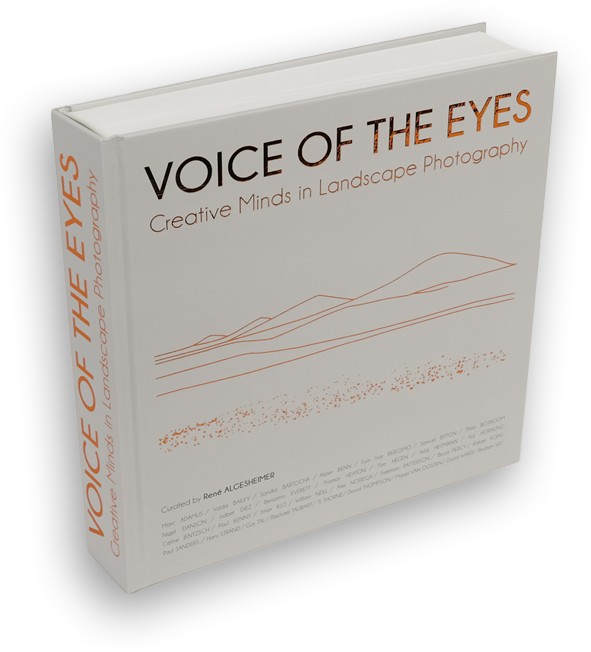
David Ward interview and landscape photography feature in Voice of the Eyes

Sample Question from the Interview

When do you know that a project is finished?

I have produced projects in the sense of published works or exhibitions. These obviously have
inception dates when the gallery opens or deadline for sending copy/images to the printer but,
as I said before, I don’t really work in projects otherwise.

Discover the Complete Interview with David Ward

Frequently Asked Questions

Who is David Ward?

David Ward is a British landscape photographer and teacher who has travelled and photographed for more than forty years.

What is central to David Ward’s photography?

A central concern in his work is the gap between how the mind and eye perceive reality and how the camera records it.

What kind of places does David Ward photograph?

He predominantly photographs natural rather than manmade environments, but he is especially drawn to overlooked details, anonymous places, and intimate encounters within them.

How does David Ward describe a successful photograph?

He identifies beauty, mystery, and simplicity as the essential ingredients of a successful photograph, even if not all three are always equally present.

Does David Ward work in long-term projects?

Not usually. He says he reacts to the environment he is in, and tends to think of individual images as short-term enquiries rather than parts of explicitly defined projects.

Why is presentation important to David Ward?

He wants presentation to avoid detracting from the image, which is why he prefers simple framing, museum glass, and heavyweight cotton matte papers.

Which photographers does David Ward explicitly mention as influences or favourites?

He cites Elliot Porter and Minor White as influences in outlook, and names The Landscape by Paul Wakefield as a favourite photography book.

Explore Voice of the Eyes

Discover interviews, creative perspectives and curated landscape photography from exceptional artists featured throughout Voice of the Eyes.

Explore the Book