TJ Thorne

TJ Thorne’s photography is defined by intimacy rather than spectacle. His work looks for the small, quiet, and deeply felt moments in nature: plays of light, interacting elements, and scenes that reward full attention rather than quick consumption. What makes it distinctive is the sincerity of its motive. He does not photograph to impose ideas on the landscape, but to enter more fully into a moment of connection, gratitude, and presence. That gives the images their calm force. In Voice of the Eyes, TJ Thorne matters because his photographs show how simplicity can become a vehicle for emotion, authenticity, and genuine communion with the natural world.

TJ Thorne’s creative identity is rooted in the belief that photography is a way of entering more deeply into life rather than stepping back from it. He describes the camera as a means of meditation and intimacy, a tool that helps him get in touch with the natural world in a personal and emotionally direct way. This relationship with nature is not abstract. It is built through full engagement with place, sensation, memory, and gratitude.

He is especially drawn to intimate plays of light and to interacting elements within the landscape. These are not treated as decorative details, but as moments of presence that reveal themselves only when approached with attention. What calls to him are the smaller things in nature, the subtler exchanges of shape, light, texture, and atmosphere that might easily be missed by a more hurried eye.

A major shift in his work came when he stopped trying to fit in stylistically and began following what genuinely moved him. He has spoken about a turning point in 2017, when he realized that he had shifted from being in nature and letting photographs happen to trying to make photographs first. Reversing that tendency deepened both his imagery and his relationship with the natural world.

What defines TJ Thorne most clearly is this combination of emotional openness and simplicity. His photographs aim not for spectacle, but for authenticity, connection, and the quiet clarity that can arise when a person is fully present to what is before them.

  • Official Website

    Website TJ Thorne 
  • Creative Context

    Oregon, United States

  • Photography Style

    Fine art nature photography shaped by calming simplicity, intimate light, interacting elements, emotional authenticity, and a meditative approach to experiencing the natural world.

  • Visual Themes

    Calming simplicity
    Intimate connection with nature
    Light
    Interacting elements
    Emotion
    Meditation
    Gratitude
    Authenticity
    Exploration
    Water
    Personal growth
    Hope and resilience

Thoughts Behind the Work

"Photography is the only thing that I found that helps me get in touch with the natural world in a very intimate and personal way."

Photography Approach

TJ Thorne works from response rather than intention. He does not usually go into the field with a message he wants to communicate or a concept he plans to force into images. Instead, he waits for something in nature to capture his mind, heart, or eyes, and then uses the camera to explore that experience more intimately.

This process is highly intuitive. He describes it as opening the channels between heart, mind, and sight rather than deciding in advance what to make. If nothing presents itself, he is content simply to experience the moment as it is. That willingness not to force a photograph is central to his method and to the emotional honesty of the work.

Themes often emerge only after images have been made. He prefers the term “exploration” to “project” because it allows a subject to evolve without fixed parameters or pressure to finish. Water, for example, became an important thread in his work not because he planned it analytically, but because photography helped him discover the depth of his response to it.

Presentation is part of the process as well. He maintains a high level of attention to detail from capture through final print or online display, wanting the finished work to remain faithful to the quality of the moment that first moved him.

Inside Voice of the Eyes

TJ Thorne’s conversation reveals photography as a practice of intimacy, gratitude, and self-discovery. Readers learn that he does not see the camera primarily as a device for getting pictures, but as a means of simplifying existence and entering more deeply into the present. That perspective shapes everything else in the interview.

One of the most valuable insights is his resistance to contrivance. He explains that he does not set out with rigid intent, and that anything communicated by his photographs happens because his heart, mind, and eyes were open to the moment. This gives the work a sense of sincerity that is central to understanding it.

The interview also makes clear how his visual language changed. He moved away from trying to emulate admired photographers and toward paying closer attention to the smaller, quieter things in nature that had always called to him. The result was a more personal and authentic body of work.

What emerges overall is a portrait of an artist for whom photography is not just image-making, but a process of exploration that deepens his connection to nature and, in turn, to himself.

Why Featured in Voice of the Eyes

TJ Thorne belongs in Voice of the Eyes because his work demonstrates how landscape and nature photography can become a form of inner alignment rather than visual conquest. His images are modest in scale but not in feeling. They are built from attention, gratitude, and a willingness to let nature reveal itself on its own terms.

His contribution is especially important because he articulates an approach grounded in authenticity. He does not photograph for approval, trend, or formula. Instead, he uses the camera to explore the things that call to him most intimately, and that gives the work a personal integrity that feels increasingly rare.

He also expands the publication’s conversation by showing how photography can influence the person making it. For TJ Thorne, the process is not merely about creating images, but about becoming more attentive, more grateful, and more willing to grow. That perspective makes his inclusion both relevant and quietly powerful.

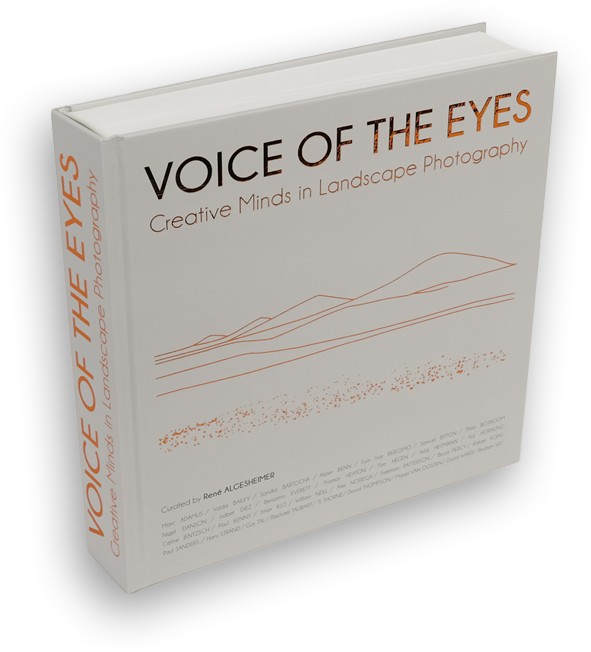
TJ Thorne interview and landscape photography feature in Voice of the Eyes

Sample Question from the Interview

Why do you photograph?

Photography is the only thing that I found that helps me get in touch with the natural world in a
very intimate and personal way. It’s my means of meditation. Getting lost in the viewfinder distills
existence down to that exact moment and subject. Nothing else in the world exists when I’m engaging
with nature through my camera. It’s an escape from the mundane reality of life that we’ve
built for ourselves, and an opportunity to get down to the nuts and bolts of existence.

Discover the Complete Interview with TJ Thorne

Frequently Asked Questions

Who is TJ Thorne?

TJ Thorne is a US-based fine art landscape and nature photographer. His website describes him as Oregon-based and focused on emotionally meaningful experiences of nature.

What kind of photography does TJ Thorne create?

He creates fine art landscape and nature photography centered on calming simplicity, intimate light, interacting elements, and emotional connection with the natural world.

How does TJ Thorne approach photography in the field?

He works intuitively, responding to what captures his heart, mind, or eyes rather than forcing a concept or searching for a predetermined image.

What subjects most often draw TJ Thorne?

He is especially drawn to intimate plays of light, interacting elements, and natural subjects that invite close, meaningful engagement. Water has become a particularly important area of exploration in his work.

Why does TJ Thorne use the word “exploration” instead of “project”?

He prefers “exploration” because it gives a subject the freedom to evolve without fixed expectations about how long it should last or when it should end.

What changed TJ Thorne’s photographic direction?

In 2017, after a trip to Utah, he realized he was more interested in intimate plays of light, shapes, patterns, textures, and interacting elements than in making conventional wide-angle landscape photographs.

What does TJ Thorne hope his work can do?

He values photographs that carry emotion, authenticity, gratitude, and connection, and he hopes that sharing his creative self helps others feel more united and less alone.

Explore Voice of the Eyes

Discover interviews, creative perspectives and curated landscape photography from exceptional artists featured throughout Voice of the Eyes.

Explore the Book

Related Photographers

Guy Tal

Guy Tal

View Photographer